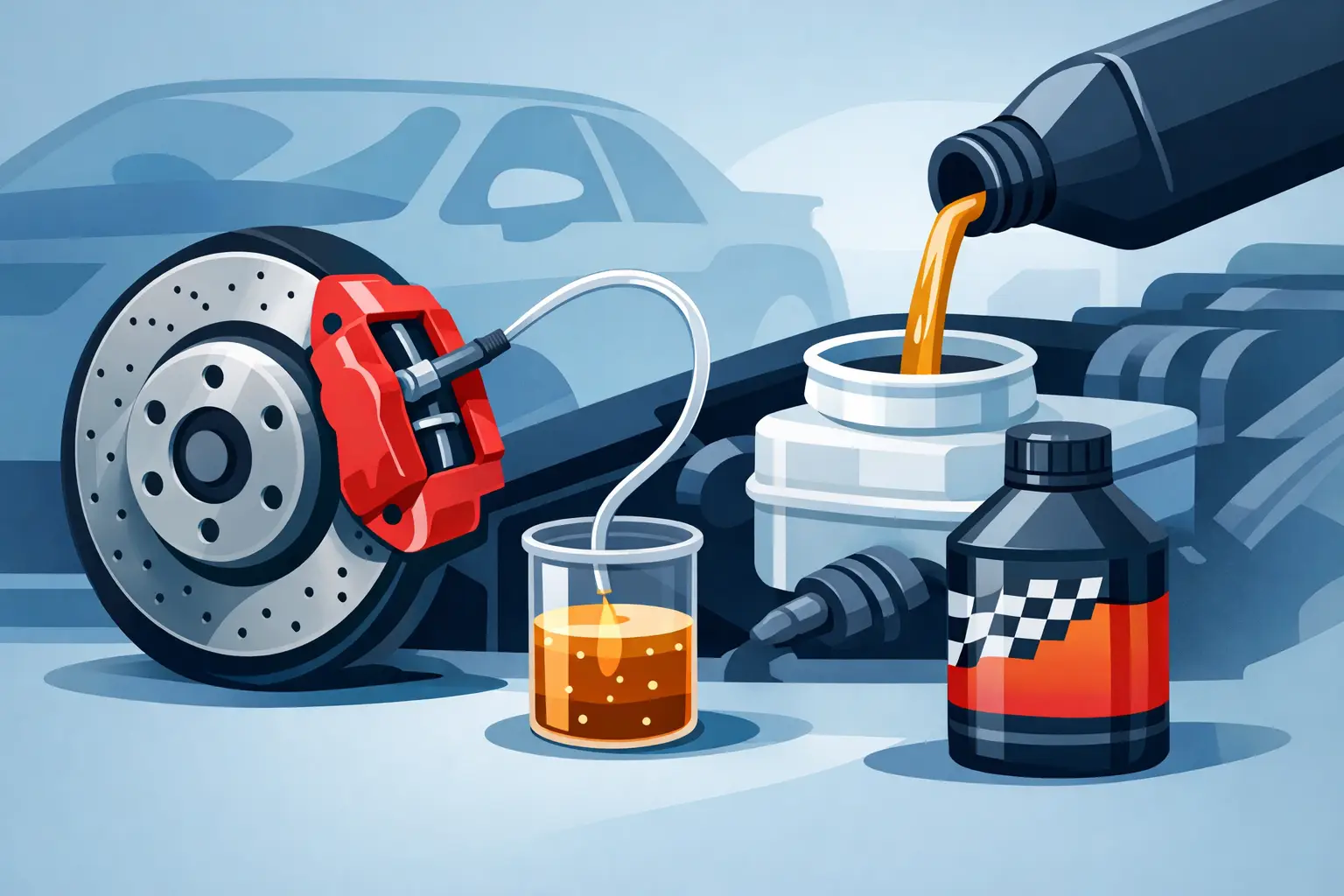
A brake pedal that gets long after a few hard laps is rarely a problem you can solve with more courage in your right foot. Bleeding brakes with racing brake fluid is one of the most effective ways to restore a firm, consistent pedal when your car is used on the track, rally track or hard street driving. But the right fluid only does the job if the system is tight, the method is clean and the air is actually getting out.
Racing brake fluid is built for higher temperatures than regular standard fluid. That doesn't mean it will magically eliminate bad pads, overheated discs or old brake hoses. However, it does give you more margin before the fluid starts to boil and the pedal loses its firm feel. For a car that has to work hard, that's exactly the margin you want when braking for the next corner comes quickly.
Start with the right racing brake fluid
Most performance cars use glycol-based DOT 4 or DOT 5.1 fluid. Many racing fluids are DOT 4, but with a significantly higher dry boiling point than regular brake fluid. It is this number that is interesting in a newly opened system. The wet boiling point also shows how the fluid performs after it has absorbed moisture over time – at least as relevant on a car that is driven both on the street and on the track.
Racing fluid is hygroscopic, meaning it absorbs moisture from the air. That's why an opened bottle shouldn't sit half-empty on the workshop shelf for months. It's better to buy the right amount, seal the bottle immediately, and change the fluid more often if the car is driven hard. A racing car that gets a lot of heat in the brakes usually needs fresh fluid much more often than a regular commuter car.
Do not mix DOT 5 silicone fluid with DOT 4 or DOT 5.1. DOT 5 is a different type of fluid and is used in different systems. If you are unsure of what is already in your car, it is better to flush the system thoroughly than to take any chances. Also check the specifications of your car, especially if it has advanced ABS or brake control systems.
When is it time to bleed the brakes?
A soft or spongy pedal is the clearest sign, but bleeding is also the right thing to do after replacing brake calipers, brake hoses, master cylinder or any other part where the system has been opened. If you have boiled the fluid on the track, the pedal may feel better when the car has cooled down, but the fluid has still taken a beating. In that case, changing and bleeding is cheap insurance for the next session.
If the pedal feels stuck in the pit but sinks when you keep constant pressure, the problem could also be a leak, a worn master cylinder or a component that moves mechanically. Bleeding is not a universal solution. Always start by checking the thickness of the pads , the condition of the discs, nipples, connections and brake hoses. If you find moisture around a caliper or clutch, the leak should be fixed before bleeding.
Prepare the job as if the car is going to the next heat
Brake fluid attacks paintwork, so cover sensitive surfaces and wipe up spills immediately. The car should be stable on jack stands if the wheels are removed – never on a jack alone. Also have the right tools ready before you open the container. At a minimum, you will need fresh brake fluid, the right wrench for the air nipples, a clear hose, a collection container and something to keep an eye on the level in the brake fluid container.
For a smoother and safer job, it is extra good to have:
- Good quality air compressor or vacuum air compressor
- Protective gloves and rags for any spills
- Torque wrench for wheel bolts and, if necessary, brake parts
- A helper if you use the classic pedal method
- Workshop manual for the car's bleeding order and ABS routine
Never read the bleeding order by feel. Many older systems bleed from the wheel furthest from the master cylinder forward, but there are cars where piping, diagonal division or ABS unit changes the order. On some modern cars, diagnostic tools are required to activate the pumps and valves in the ABS module after the system has been bled.
Bleeding brakes with racing brake fluid step by step
Start by sucking out as much of the old fluid as possible from the reservoir without exposing the bottom or drawing in dirt. Then top up with the new racing brake fluid. Keep the level well above the min mark throughout the process. If the reservoir draws air, you will have to start over, and in the worst case, also deal with air in the ABS unit.
With a compressed air bleeder, connect the adapter tightly to the reservoir and build up a moderate, even pressure according to the tool and car's recommendations. Too much pressure can cause leaks with a bad adapter or force fluid up where you don't want it. Compressed air is often the best method when flushing the entire system, as the flow is even and you don't have to pump the pedal over and over again.
Place the clear hose over the air nipple on the first yoke. The other end of the hose should be in a collection container. Open the nipple carefully, let the fluid flow until it is clear and free of bubbles, then close the nipple before releasing the pressure or moving the pedal. Repeat at each wheel in the correct order for your vehicle.
If you are using the two-man method, have the assistant pump the pedal gently a few times and then hold it down. Open the nipple, let the fluid and any air pass, and close the nipple before releasing the pedal. Communication must be established: hold, open, close, release. If the nipple is open when the pedal is raised, the system can draw air in through the nipple.
On older cars with a master cylinder that has had many miles on it, you can avoid pressing the pedal all the way to the floor. That part of the cylinder bore is not normally used and may be dirty or corroded. A pedal stop block or a bleeder will reduce that risk.
This is how you see that the system is ready
Don't just look for large air bubbles. Small bubbles can get stuck inside the hose and look like air in the system. Gently tap the caliper and hose if necessary, wait a minute, and check the flow again. When fresh fluid comes out evenly and without recurring bubbles, close the nipple with reasonable force—not so hard that you damage it.
When all the wheels are ready, adjust the level in the reservoir, fit the wheels with the correct torque and pump up the pedal before rolling the car. The pedal should feel firm already in the garage. Then start the engine and check again, as the brake servo changes the feel of the pedal. It may sink slightly as the servo helps, but it should not slowly disappear towards the floor.
Common mistakes that cost braking feel
The most common mistake is letting the reservoir run empty. The next is using an old, opened bottle of racing fluid, which takes away a lot of the benefit of changing. Dirt around the air nipple can also get into the threads or system, so clean the area before opening.
Another classic is chasing a soft pedal with multiple air bleeds when the fault is actually mechanical. Flexing rubber hoses, looseness in the pad assembly, incorrectly mounted calipers or discs with excessive play can result in a pedal that feels bad even though the system is air-free. If you have changed to a larger caliper, a different master cylinder or brake balance rod, the pedal gear ratio and piston areas may also be mismatched. In that case, it is the design of the brake system that needs to be reviewed, not just the fluid.
Don't forget the break-in period either. New pads and discs should be embedded according to the manufacturer's recommendations. Racing brake fluid increases the temperature margin, but it does not replace pads that are selected for the correct weight, tire grip, speed and use.
Post-inspection before street or track
Do a quiet test drive where you brake in a controlled manner and check that the car brakes straight. Then inspect the nipples, hose connections and reservoir again. On the track, it is smart to feel the pedal already on the warm-up lap, not only when you brake late from full speed.
Properly bled brakes with fresh racing brake fluid won't cut it in the face of poor service, but it will give you a braking system that responds just as well when the pace picks up. It's the kind of confidence that lets you focus on the braking point, the line, and the next lap – not whether the pedal will be there.